Hair
How to prevent frizzy hair in Calgary’s dry climate
Most frizz advice is written for humid cities. In Calgary the culprits are dry air, static and hard water, and the fixes are a little different.
The short answer
To prevent frizzy hair in Calgary, add moisture and cut friction: use a hydrating conditioner and leave-in, clarify every few weeks to remove hard-water build-up, dry hair gently with a microfibre towel, protect it from heat, and sleep on silk or satin.
Frizz here is mostly dryness and static, not humidity, so products made for humid climates can miss the point.
Why hair frizzes
Each hair is covered in tiny overlapping scales called the cuticle. When the cuticle lies flat, hair looks smooth and shiny. When it’s roughed up by dryness, heat, friction or chemical damage, the scales lift, hair loses moisture, and strands stop lying together. That’s frizz.
In humid cities, dry hair pulls moisture from the air and swells. Calgary has the opposite problem.
What’s different in Calgary
- Dry air. Calgary’s relative humidity averages around 45 to 55 percent in the afternoon, and indoor air gets far drier once the furnace runs all winter. Dry hair turns brittle and flyaway.
- Static. Dry air plus toques, scarves and wool coats builds static that makes hair stand up.
- Chinooks. Warm, dry chinook winds can raise the temperature by 20 degrees or more in a few hours, and they dry hair and skin out quickly.
- Hard water. The City of Calgary rates its tap water as hard, especially in the south of the city and from December to February. Calcium and magnesium build up on the hair, so it feels rough, looks dull and tangles more.
- Sun at altitude. Calgary gets around 2,400 hours of sunshine a year at over 1,000 metres, and UV weakens the cuticle over time, especially on coloured hair.
How to stop frizz: a routine that works here
- Wash less, condition more. Shampoo two or three times a week, and condition every time.
- Clarify every few weeks. A clarifying or chelating shampoo lifts mineral build-up from hard water. Follow it with a mask.
- Use a leave-in. Apply a leave-in conditioner or cream to damp hair, focused on the lengths and ends.
- Dry gently. Squeeze water out with a microfibre towel or cotton T-shirt. Rubbing with a regular towel roughs up the cuticle.
- Protect from heat. Use a heat protectant, keep tools below their highest setting, and point the dryer down the hair shaft.
- Seal the ends. A drop of hair oil or serum on dry ends calms flyaways and static.
- Cut friction. Sleep on a silk or satin pillowcase, and look for a satin-lined toque in winter.
- Humidify. A humidifier in your bedroom helps your hair, skin and sinuses through the furnace months.
- Trim regularly. Split ends travel up the hair and frizz more. A trim every 8 to 12 weeks keeps them in check.
Static, fast
If your hair is flying away on a January morning, rub a tiny amount of hair cream or oil between your palms and smooth it over the surface. A wooden or natural-bristle brush and a damp comb both help too.
Salon treatments for frizz
Home care keeps frizz down day to day. A salon treatment resets hair that has gone rough.
- Hair botox. Despite the name, it contains no botulinum toxin. It’s a deep conditioning treatment that fills and coats the hair fibre, so hair looks smoother and shinier for several weeks.
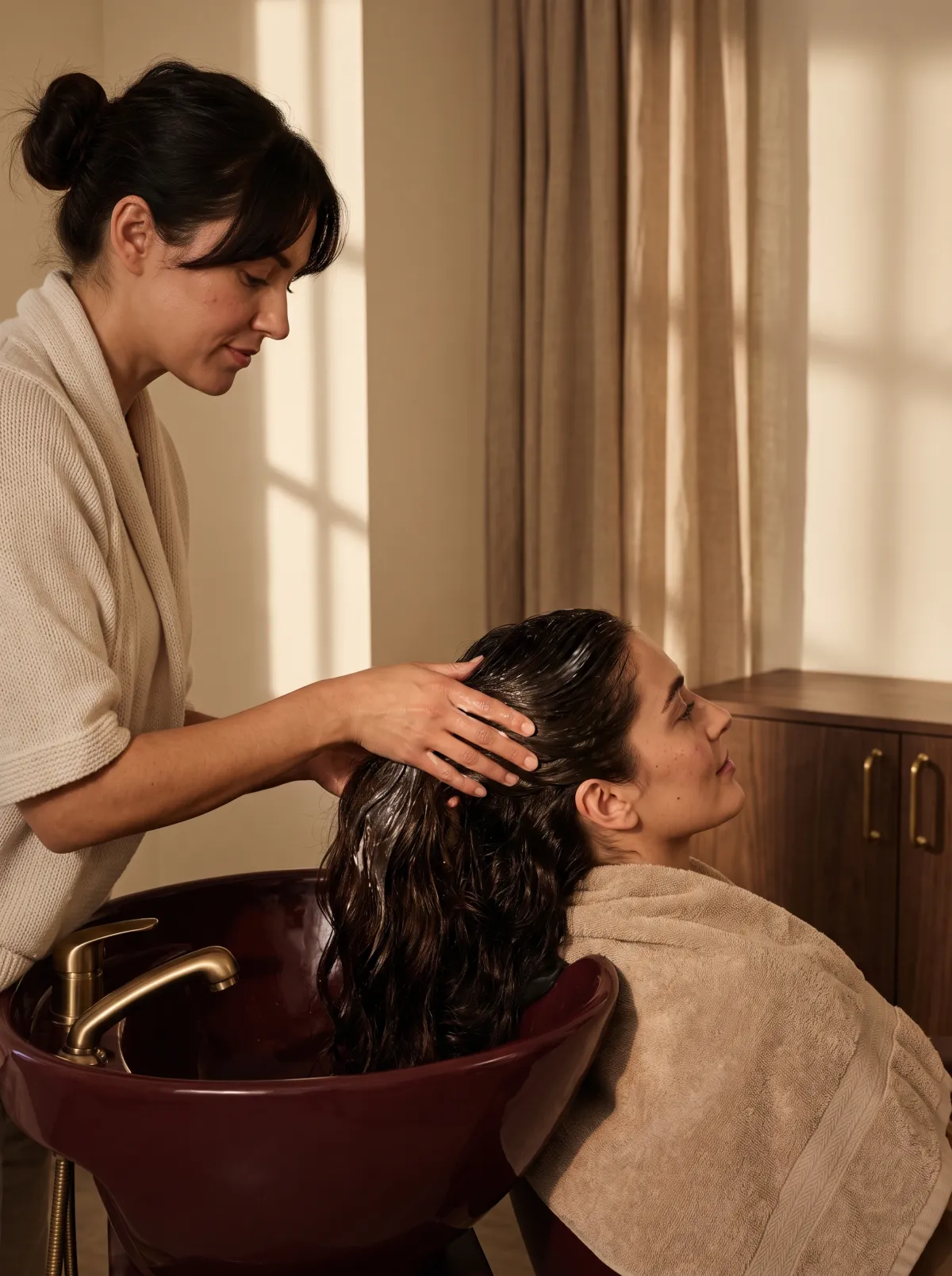
- Professional treatments and masks. At Mood we offer deep conditioning masks, a Milbon treatment and KEVIN.MURPHY treatments, chosen for what your hair needs, whether that’s moisture, strength or a healthier scalp.
- A gloss or toner. On coloured hair, a gloss adds shine and smooths the surface.
Your stylist can tell you which one fits your hair, and how often to book it.
Can you get rid of frizzy hair permanently?
Not permanently, because new hair keeps growing in with your natural texture and the weather keeps doing what it does. Smoothing treatments last weeks, not years. The lasting answer is a routine that suits your hair and Calgary’s climate, plus a treatment when your hair needs a reset.
If your frizz is really curl that has lost definition, a perm or a curl routine may be the better fix. See how long a perm lasts.
Questions we hear
Why is my hair so frizzy in winter?
Low indoor humidity, static from hats and coats, and harder tap water all peak in winter in Calgary. Add more moisture and a weekly mask from November to March.
Does a shower filter help with hard water?
It can reduce some minerals. A regular clarifying wash is the simpler, more reliable way to lift build-up.
Is frizz a sign of damage?
Sometimes. Frizz can be natural texture, dryness or damage. If your hair also snaps, feels gummy when wet or won’t hold a style, book a consultation before your next colour.
Book a smoothing treatment
Our stylists can recommend the right treatment for your hair, from hair botox to a Milbon treatment, and show you a routine that works in Calgary’s climate.