Hair
Types of hair extensions: tape-in, weft, fusion and beads compared
Tape-ins, wefts, fusion and beads all add length and fullness, but they attach differently, last differently and suit different hair. Here’s how to choose.
The short answer
The four main types of professional hair extensions are tape-ins, wefts (sometimes called weave), fusion (keratin bonds) and beads (micro-links).
Tape-ins are quick, flat and kind to fine hair. Wefts add the most volume and length. Fusion looks and moves the most naturally. Beads need no heat or glue.
The extension hair itself can last six months to a year or more with good care. The attachment needs moving up or refreshing every six to eight weeks as your hair grows.
How the main types compare
| Tape-in | Weft (weave) | Fusion (keratin bond) | Beads (micro-links) | |
|---|---|---|---|---|
| How it attaches | Thin adhesive panels pressed onto both sides of a small section | A long strip of hair sewn or beaded onto a row of your hair | Small strands bonded one by one with keratin | Small strands clamped with a tiny ring, no heat or glue |
| Looks and feels | Flat and smooth, lies close to the head | Lots of volume quickly, slight ridge where the row sits | Very natural, moves like your own hair | Natural, small bead you can feel at the root |
| Best for | Fine to medium hair, first-timers | Medium to thick hair, big length and volume | Most hair types, people who wear their hair up | Medium to thick hair, people who want no adhesive |
| Install time | Fastest | Moderate | Longest | Long |
| Upkeep | Moved up every 6 to 8 weeks | Tightened every 6 to 8 weeks | Lasts about 3 to 4 months, then removed | Moved up every 6 to 8 weeks |
| Can the hair be reused | Yes, re-taped | Yes | Usually not, new bonds each time | Yes |
These are typical ranges. How your extensions behave depends on how fast your hair grows, how thick it is and how you care for it at home.
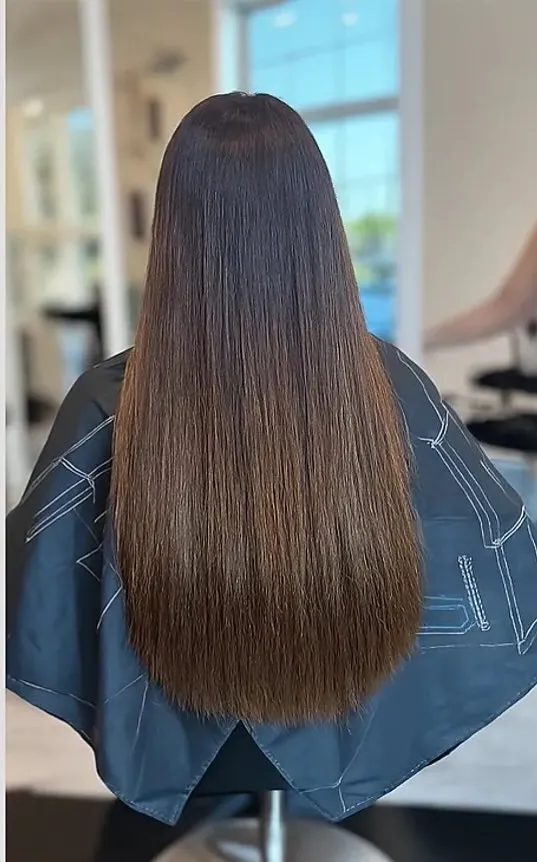
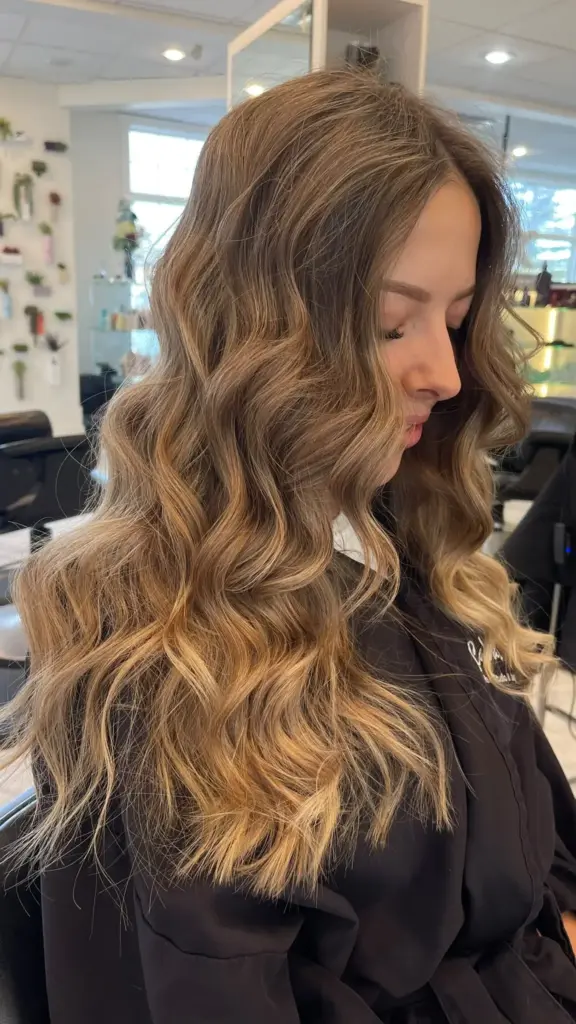
Tape-in extensions
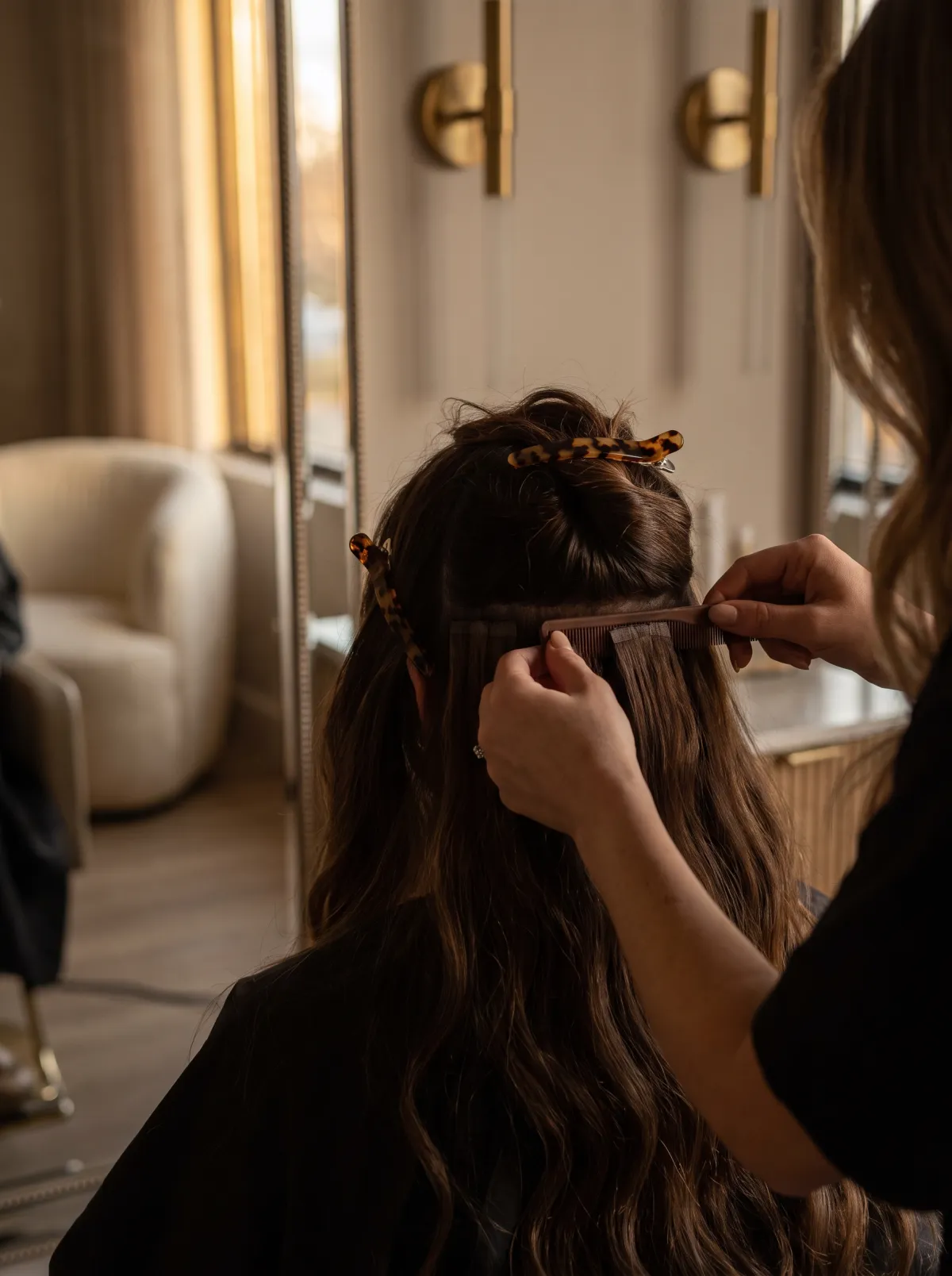
Tape-ins are panels of hair, usually about an inch or two wide, with a thin medical-grade adhesive strip along the top. Your stylist takes a very thin slice of your own hair and sandwiches it between two panels.
Why people like them
- Quick to apply compared with other methods.
- They lie flat, so they’re comfortable and hard to spot.
- The weight is spread across a wider area, which is kind to fine hair.
- The same hair can usually be removed, re-taped and reapplied.
Things to know
- Oils and conditioner near the roots can loosen the adhesive, so you apply products from the mid-lengths down.
- Very high ponytails can show the panels.
- They need moving up every six to eight weeks as your hair grows.
Weft (weave) extensions
A weft is a long, continuous strip of hair. Your stylist creates a foundation row along your head, usually with small beads or a braid, and sews or attaches the weft to it. You’ll also hear wefts called weave, sewn-in, beaded weft or hand-tied, depending on how the strip is made and attached.
Why people like them
- They add a lot of volume and length in a few rows.
- There’s no glue or heat on your hair.
- A full head can look dramatic, which is great for big transformations.
Things to know
- The row can feel snug for the first few days while you get used to it.
- Wefts need tightening every six to eight weeks to stay close to the scalp.
- They suit medium to thick hair best, because the row needs enough of your own hair to hide it.
Fusion (keratin bond) extensions
Fusion extensions are small strands of hair tipped with a keratin bond. Your stylist attaches each strand to a tiny section of your hair, using a heat tool to soften the bond so it wraps around your hair.
Why people like them
- The most natural movement of any method, because each strand is separate.
- They hold up well in updos and ponytails.
- No regular move-up appointments: they’re worn for a few months, then removed.
Things to know
- The install takes longer, because strands go in one at a time.
- Removal needs a professional solution and patience.
- The hair usually can’t be reused for a second install.
Bead (micro-link) extensions
Bead extensions, also called micro-links or i-tips, are small strands of hair threaded through a tiny ring with a section of your own hair, then clamped closed.
Why people like them
- No heat and no adhesive.
- Strands can be moved up and the hair reused.
- Easy to adjust if one feels tight.
Things to know
- You can feel the small beads at the root, especially at first.
- They need moving up every six to eight weeks.
- Beads need careful placement so they don’t pull on fine hair.
How long do hair extensions last?
There are two answers, and both matter.
The attachment lasts until your hair grows it away from the scalp. Your hair grows around a centimetre a month, so tape-ins, wefts and beads need moving up or tightening about every six to eight weeks. Fusion bonds are usually worn for three to four months and then removed.
The extension hair itself can last six months to a year or longer with good care, and reusable methods let you keep the same hair through several move-ups. What wears it out is the same as what wears out your own hair: heat, harsh shampoos, sun, chlorine, rough brushing and sleeping on it wet.
Which hair extensions are best for thin hair?
For fine or thin hair, tape-ins are usually the first choice. The panels are light and flat, and the weight is spread across a wide area, so they don’t pull on any one spot. A small number of carefully placed fusion bonds can also work well.
Heavy full-head wefts are usually not the best fit for very fine hair, because there may not be enough of your own hair to support and hide the row.
The most important rule for thin hair is less is more. The goal is enough extra hair to look fuller without putting strain on your roots. Your stylist will look at your hair’s density and suggest the lightest method and amount that gets you the look you want.
Do hair extensions damage your hair?
Professionally installed, well-maintained extensions shouldn’t damage your hair. Damage almost always comes from one of these:
- Too much weight for the hair it’s attached to.
- Skipping maintenance. Extensions left in too long start to mat and pull at the root.
- Removing them yourself. Pulling tape-ins or bonds out without the right solution takes your own hair with them.
- Tension. Rows or bonds placed too tight, or very tight ponytails every day, strain the follicles.
- Sleeping with wet hair. Wet roots and attachments tangle into knots.
You’ll naturally shed some hair every day. With extensions, that shed hair is held in place until your next appointment, so it can look like more hair comes out at a removal or move-up. That’s normal shedding collecting, not damage.
How to care for hair extensions
Washing
- Yes, you can wash your extensions. Most people wash two or three times a week.
- Use a sulfate-free shampoo and a gentle conditioner.
- Keep conditioner and oils away from the roots and attachments.
- Wash with your head upright, in the shower, rather than flipping your hair forward over a sink.
Drying and styling
- Dry the roots and attachments completely, every time.
- Use a heat protectant, and keep hot tools on a moderate setting and away from the bonds or tape.
- Brush gently, starting at the ends and working up, with a soft extension brush. Hold the hair at the root while you brush.
Sleeping
- Never sleep on wet hair.
- Tie your hair in a loose braid or low ponytail at night.
- A silk or satin pillowcase reduces friction and tangles.
Swimming and hot water
- Tie your hair up and keep it out of the water when you can.
- If it gets wet in a pool or hot spring, rinse with fresh water straight away and condition the lengths.
Hair extensions in Calgary’s climate
Calgary’s weather is hard on extension hair, because extension hair can’t get moisture from your scalp the way your own hair does.
- Dry air and chinooks. Calgary’s dry air and warm chinook winds pull moisture out of the lengths, so extensions can feel dry and tangle faster. A leave-in conditioner on the mid-lengths and ends after every wash makes a real difference.
- Hard water. The City of Calgary rates its water as hard, especially in winter. Minerals build up on the hair and make it rough and dull. A gentle clarifying shampoo every few weeks, kept away from the attachments, helps.
- Toques, scarves and coat collars. Winter layers rub the hair at the nape and cause matting where the lowest rows sit. Braid your hair loosely under hats and check the nape often.
- Sun at altitude. Strong summer sun fades and dries extension hair, especially blonde. Wear a hat at the lake, on the trail or at Stampede.
- Hot springs and pools. Mountain weekends often include a soak. Keep your hair up and out of the water, and rinse and condition afterwards.
Planning extensions around an event
Weddings, grad and Stampede are the most popular reasons for extensions in Calgary. A few tips:
- Book about two weeks ahead. That gives the hair time to settle, gives you time to learn how to style it, and leaves room for small adjustments.
- Colour before extensions. If you’re changing your colour, do it first so your stylist can match the extension hair to the new shade.
- Do a trial style. If you’re wearing your hair up on the day, try the style in advance so the attachments stay hidden.
- Plan the next appointment. Book your first move-up or tightening when you book the install, so it isn’t missed after the event.
Hair extensions at Mood
At our salon in Altadore, SW Calgary, you can book:
- Tape-in extensions, including single tape-in removal and reinstallation.
- Weft, fusion and bead installs.
- Full-head installation.
- Weft tightening, booked by the row.
- Extension removal.
Not sure which method suits your hair? Call us on 403-287-7009 and we’ll help you choose before you book. Thinking about colour as well? Read balayage vs highlights, and for smoother, healthier lengths between appointments, see what hair botox does.
Questions we hear
Can you wash hair extensions?
Yes. Use sulfate-free products, keep conditioner off the attachments, and dry the roots completely.
Can you colour hair extensions?
Good-quality human hair extensions can usually be toned or darkened by a professional. Lightening them is harder on the hair. It’s best to choose extensions that match your colour, and to colour your own hair before they go in.
How long does it take to put extensions in?
It depends on the method and how much hair you’re adding. Tape-ins are the quickest; fusion takes the longest because each strand goes in by hand. Your stylist will give you a time when you book.
Can I swim with hair extensions?
You can, but tie your hair up, keep it out of the water if possible, and rinse and condition straight after. Chlorine and salt dry out extension hair quickly.
Do hair extensions hurt?
They shouldn’t. Wefts and beads can feel snug for the first few days. Lasting pain or pulling means something is too tight, so call your stylist.
Can I wear my hair up with extensions?
Yes, especially with fusion and well-placed tape-ins. Very high ponytails can show some attachments, so ask your stylist to place them with your favourite styles in mind.
Book hair extensions in SW Calgary
Mood offers tape-in, weft, fusion and bead extensions, plus weft tightening and removal. Your stylist will help you choose the method that suits your hair.